Mold Prevention and Humidity Control in Vero Beach, FL
Mold prevention in a humid coastal home starts with moisture. Warm, damp indoor air, a slow plumbing drip, and poor airflow can each support mold growth, and Vero Beach homes face all three through much of the humid season.
This page explains how to prevent mold with practical steps for humidity control, AC care, ventilation, leak checks, and drying after flooding. It also covers mold prevention Vero Beach homeowners can use when a home sits empty for a stretch, and what to check after a storm.
How to Prevent Mold in a Humid Coastal Home
Preventing mold means looking for moisture first and mold second. When indoor air stays damp, when a pipe drips out of sight, and when steam has nowhere to go, mold has what it needs to grow. The steps below focus on those three causes, with habits that fit coastal living in Florida.
Keep indoor humidity under control
Humidity control is the foundation of mold prevention. High humidity mold risk rises when indoor air stays damp for long stretches, even without a visible leak. A musty odor in a closed room, condensation on windows, and visible mold growth in a damp corner can each signal that indoor air needs attention.
Aim for indoor humidity under 60 percent, and check readings in more than one room. Rooms that stay closed, rooms with poor airflow, and rooms near plumbing deserve extra attention. Mold in attic spaces and mold in crawl space areas also point to humidity and airflow problems that need correction at the source.
- Run the air conditioner steadily instead of switching it off and on repeatedly.
- Use a dehumidifier in damp rooms, and empty or drain it as the maker directs.
- Keep interior doors open when possible so air can move through the home.
Fix leaks promptly
Hidden leaks cause more trouble than obvious ones, because moisture can collect out of sight. Slow leak mold can develop behind a wall, under a sink, or near a pipe joint long before any sign appears in the open. That is why mold behind walls often traces back to a small drip that went unnoticed.
Check under sinks, around toilets, near appliances that use water, and along pipe runs for dampness, warping, and discoloration. When hidden moisture is suspected, moisture detection tools used during a professional visit can help locate damp areas without opening walls at random. For a closer look at how an inspection works, see mold inspection and testing in Vero Beach.
- Look for soft spots, swelling, and discoloration near plumbing and fixtures.
- Listen for running water when taps are off, and watch for unexplained damp patches.
- Fix a drip at its source instead of hiding it and hoping it stops.
Ventilate bathrooms and kitchens
Steam from showers, baths, and cooking adds moisture to indoor air. When that moisture has nowhere to go, poor ventilation mold risk rises, and condensation mold can appear on cool surfaces. Exhaust fans, open windows when outdoor air is drier, and lids on pots while cooking all help move moist air out.
Run exhaust fans during showers and cooking, and leave them running after the steam clears. Laundry areas also add moisture to indoor air, so ventilation there matters too. If a fan vents into an enclosed space instead of outdoors, have that path corrected so moist air leaves the home.
Humidity Targets for Florida Homes
Florida homes need a clear humidity target, because outdoor air often stays damp. A target gives every other step a reference point, from AC settings to dehumidifier use. The guidance below focuses on steady indoor readings rather than quick fixes.
What indoor humidity level to aim for
Aim for indoor humidity under 60 percent in living areas. When readings stay above that level, high humidity mold risk rises, and musty odor and visible mold growth become more likely. A steady reading below the target matters more than a single low reading after the air conditioner has just run.
Place matters. A reading near an air conditioner vent can look drier than a reading in a closed room or near a plumbing wall. Check several rooms, note which rooms stay damp, and focus humidity control efforts where readings stay highest.
Hygrometers and dehumidifiers
A hygrometer shows indoor humidity in plain numbers, so habits can be adjusted with evidence instead of guesswork. Keep one in a main living area and another in a room that tends to stay damp. Compare readings through the humid season to learn which rooms need more airflow, more AC run time, or a dehumidifier.
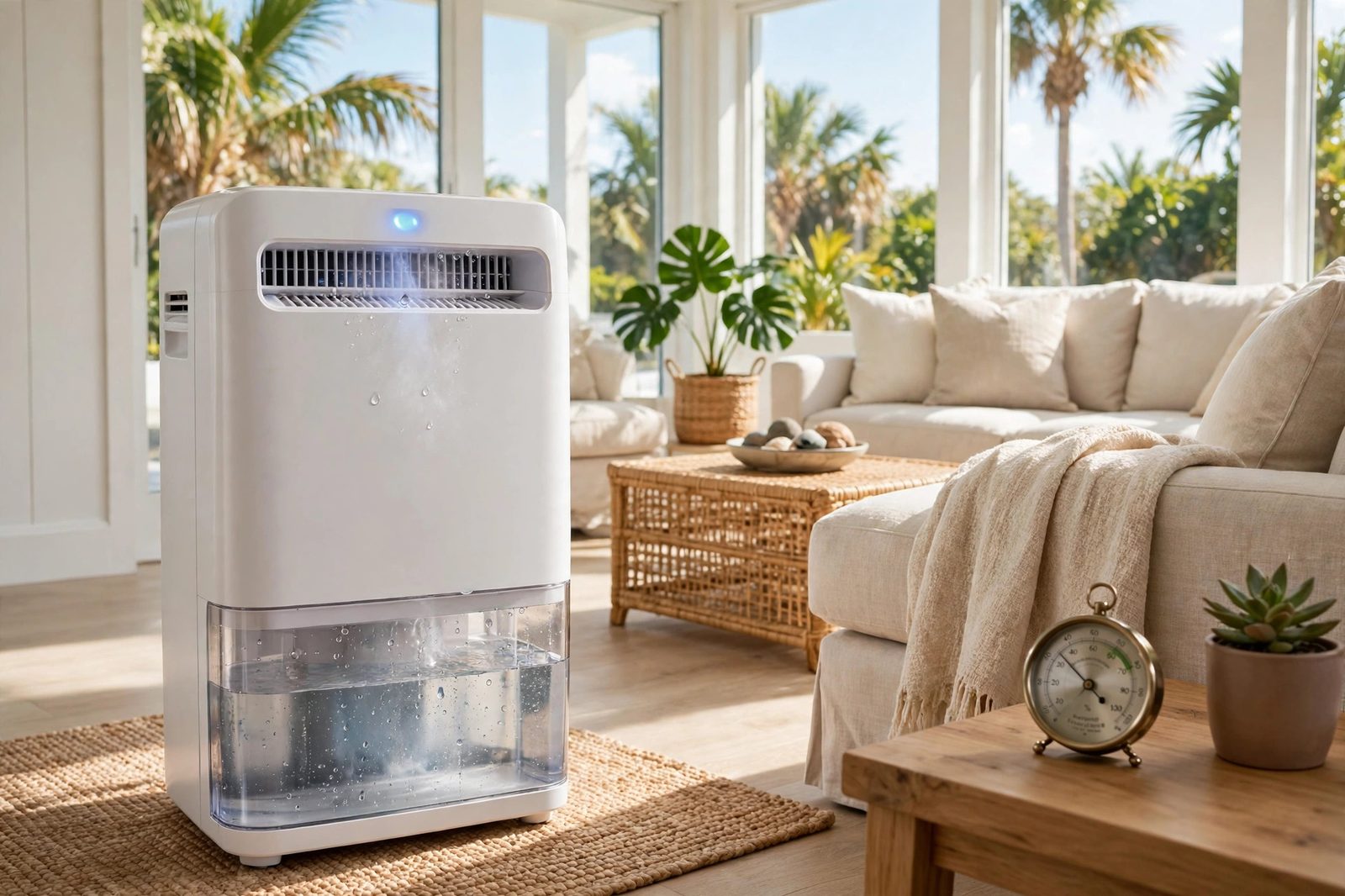
A dehumidifier removes moisture from indoor air and supports drying and dehumidification after flooding or a leak. Size the unit for the room, keep doors and windows closed while it runs when the maker directs, and check that collected water drains as intended. A dehumidifier helps, but it does not fix a leak or replace ventilation.
AC settings that help (and settings that hurt)
AC settings shape indoor humidity. A steady, moderate thermostat setting lets the system remove moisture as it cools. Frequent on-and-off cycling, very low settings followed by warm spells indoors, and a fan left running constantly can each leave indoor air damp and support AC condensation mold.
Set the fan to automatic when possible, so the system can drain moisture between cooling cycles. Keep the condensate drain clear, and have the system checked when cooling feels weak, when indoor air stays damp, or when condensation mold appears near vents. Small setting changes, kept steady, support humidity control without the swings that frequent adjustments can cause.
AC, Ducts, and Ventilation
Air conditioning, ductwork, and ventilation work together. When one part struggles, moisture can collect in vents, ducts, and nearby surfaces. This section explains what to look for and when each type of help fits.
Mold around AC vents
Mold around AC vents often starts with condensation. Cool air meeting warm, damp indoor air can leave moisture on vent surfaces, and that moisture can support AC condensation mold. Musty odor when the system starts, discoloration near vents, and visible mold growth on or near a vent each deserve a closer look.
Do not wipe a vent and assume the cause is gone. Check the condensate drain, the thermostat setting, and whether the system cycles in short bursts. If growth returns after cleaning, or if growth appears in more than one room, the cause may sit deeper in the system, and a professional look can help find it.
Condensation and duct leaks
Condensation mold can form where ducts run through damp areas and cool surfaces meet warm air. Duct leaks add to the problem by letting conditioned air escape and damp air enter. Mold in air ducts can follow when moisture stays trapped inside ductwork and airflow cannot dry it.
Signs include damp spots near duct joints, uneven cooling from room to room, and a musty odor that strengthens when the system runs. Hidden moisture inside ductwork is hard to see from a vent alone, so moisture detection during a professional visit can help locate damp sections. Keep duct joints sealed, keep insulation dry, and correct leaks at their source.
When to call an HVAC company vs a mold company
HVAC mold concerns often need both trades, but in the right order. An HVAC company fits when the problem centers on the air conditioner, ductwork, airflow, or condensate drainage. A mold company fits when visible mold growth, a persistent musty odor, or mold in air ducts needs assessment and handling.
When the cause is unclear, start with an assessment of moisture and airflow, then follow the findings. DIY mold removal vs professional help is a useful comparison here: small surface cleaning may suit a homeowner in some cases, while growth inside ductwork, growth behind walls, or growth linked to hidden moisture calls for professional handling. Learn more about mold removal and remediation in Vero Beach before deciding on next steps.
Preventing Mold After Water Damage
The link between water damage and mold is moisture that stays too long. Mold after water damage can begin when wet materials, damp air, and poor airflow combine, and storm damage mold and hurricane mold follow the same pattern after storms. Flood cleanup that focuses on thorough drying supports prevention from the start.
The first 24 to 48 hours
Mold growth 24-48 hours is the window most often described for early growth after flooding or a leak. That window is a reason to act promptly, not a reason to panic. Move wet items to drier air when it can be done safely, open interior doors for airflow, and start drying as soon as the area is safe to enter.
Avoid running fans that blow across visible mold growth, and avoid disturbing growth before it has been assessed. Keep notes on what got wet, when it got wet, and what was done first. Those notes help later, when drying progress and insurance records are put together.
Drying steps that matter
Structural drying focuses on wet framing, wall cavities, and flooring that hold moisture after flooding. Drying and dehumidification work together: airflow moves damp air away from wet surfaces, while dehumidifiers remove moisture from the air. Hidden moisture can linger in wall cavities and under flooring, so moisture detection helps confirm which areas are still damp.
Remove wet soft goods and porous items that cannot be dried, and keep air moving through affected areas. Do not seal a damp wall cavity or hide a damp surface and assume drying is finished. When dampness persists, or when mold behind walls is suspected, a professional assessment can guide next steps.
For growth that looks dark or spreads quickly, learn about black mold removal in Vero Beach and arrange an assessment before disturbing it.
What to document for insurance
Insurance claim documentation starts at the first sign of water intrusion. Photograph wet areas, damp materials, and visible mold growth before anything is moved or cleaned. Note dates, times, and weather conditions in plain language, and keep a simple log of calls, visits, and steps taken.
Keep copies of invoices, messages from insurers, and notes from each visit in one place. Do not discard wet materials before they have been photographed and noted, unless leaving them in place creates a safety problem. Clear, dated records support insurance claim documentation and help everyone work from the same facts.
Seasonal and Absentee-Owner Prevention
Homes that sit empty for a stretch need a different routine. Without regular habits like cooking, showering, and adjusting the thermostat, humidity can climb unnoticed. The checks below help absentee owners in Vero Beach, Sebastian, and Fellsmere keep humidity control in place while away.
Pre-departure checks before leaving
Before leaving, walk through the home and look for drips, damp patches, and discoloration near plumbing, appliances, and windows. Fix leaks promptly, confirm the air conditioner and dehumidifier are working as intended, and confirm that exhaust fans vent outdoors. A quick pass now can prevent a larger moisture problem from sitting unnoticed.
- Turn off water to appliances that will not be used, where shutoff valves allow.
- Clear the condensate drain path and check that the air conditioner drains as intended.
- Leave interior doors open so air can move through the home.
Humidity control while away
Humidity control while away depends on steady AC operation and a working dehumidifier. Keep the thermostat at a steady, moderate setting, and avoid switching the system off entirely. The goal is indoor humidity under 60 percent, even when no one is present to notice damp air.
If a neighbor or property watcher can check the home, ask for readings from a hygrometer and a look for musty odor and visible mold growth. A simple arrangement for regular checks can catch a leak early, before hidden moisture spreads. For area details, see service areas in Indian River County.
What to check on return
On return, walk through each room and use sight and smell before unpacking. Look for visible mold growth, musty odor, discoloration, warping, and damp patches. Pay attention to rooms that stayed closed, areas near plumbing, and spaces that tend to stay damp.
Check the air conditioner, the dehumidifier, and the hygrometer reading. If the reading shows damp air, or if mold behind walls is suspected, arrange an assessment before airing the home with fans that could spread spores. Mold in attic spaces and mold in crawl space areas deserve a look too, since both can hide moisture problems.
Mold Prevention Checklist for Vero Beach Homes
This checklist gathers the habits from this page into a simple routine for mold prevention Vero Beach homeowners can follow. Use it as a starting point, and adjust the routine to the home, the AC system, and the humid season.
Monthly checks
Monthly checks catch small moisture problems before they grow. Keep the routine short and steady, and note anything that changes from one check to the next.
- Check hygrometer readings in several rooms and confirm readings stay below the humidity target.
- Look under sinks, around toilets, and near appliances for drips and damp patches.
- Run exhaust fans during showers and cooking, and confirm they vent outdoors.
- Check the condensate drain and the air conditioner filter, and clear any blockage at the drain outlet.
- Walk through rooms that stay closed and look for musty odor and visible mold growth.
Seasonal checks
Seasonal checks suit the humid season and the storm season in Florida. Use them to prepare for wetter stretches and to catch moisture problems that build slowly.
- Confirm the air conditioner, dehumidifier, and hygrometer are working as intended before the humid season.
- Check gutters and downspouts for blockages that can send water toward the home.
- Check the roof from the ground for missing shingles and signs of water intrusion.
- Check duct joints and vent surfaces for dampness, discoloration, and condensation.
- Confirm exhaust fans vent outdoors and that airflow through the home feels steady.
After-storm checks
After a storm, check for flooding, water intrusion, and signs of storm damage mold and hurricane mold. Early checks support drying and help prevent mold from returning after the storm passes.
- Walk through the home and look for flooding, damp patches, discoloration, and musty odor.
- Check the air conditioner, ducts, and vents for dampness and visible mold growth.
- Start drying promptly, with airflow and dehumidification, and watch for hidden moisture.
- Photograph wet areas and keep notes for insurance claim documentation.
- Arrange flood cleanup help that focuses on thorough drying when flooding affects living areas.
Mold Risk Checker for Your Home
Answer the questions below about what you have noticed in the home. The result is general guidance only, not a finding about the home, and it does not replace a professional check.
Frequently Asked Questions
Mold spores are present in indoor and outdoor air, so prevention focuses on moisture rather than on keeping every spore out. When humidity control, leak fixes, ventilation, and AC care stay steady, mold has less of what it needs to grow. When growth returns, asking why mold keeps coming back often points to a moisture source that was missed. Prevention lowers risk, but it does not promise a home without mold.
A dehumidifier supports humidity control by removing moisture from indoor air, and it can help keep damp rooms below the humidity target. Alone, it does not fix leaks, improve ventilation, or correct AC problems that add moisture. Used with leak fixes, ventilation, and steady AC care, a dehumidifier is a useful part of mold prevention, but it is not a stand-alone answer.
Ask About a Mold Prevention Assessment
If damp air, a musty odor, or visible mold growth keeps returning, an assessment can help find the moisture source. Vero Beach Mold Pros serves Vero Beach, Sebastian, and Fellsmere in Indian River County, with mold prevention Vero Beach homeowners can discuss for homes on the Treasure Coast in Florida.
A useful reminder is: never use bleach on mold. Bleach does not address the moisture that supports growth, and disturbing growth without a plan can spread spores to other rooms. DIY mold removal vs professional help is worth weighing with care, and an assessment can help decide which path fits the situation.
Call (772) 555-0134 to ask about a mold prevention assessment, or contact Vero Beach Mold Pros about a prevention assessment. For common questions, see answers to common mold questions.